
 By
Rotini catches the sausage and tomato sauce in its spirals, with Parmesan stirred in off the heat to finish. Brown the sausage before adding the stock: those browned bits belong in the sauce, not at the bottom of the washing-up.
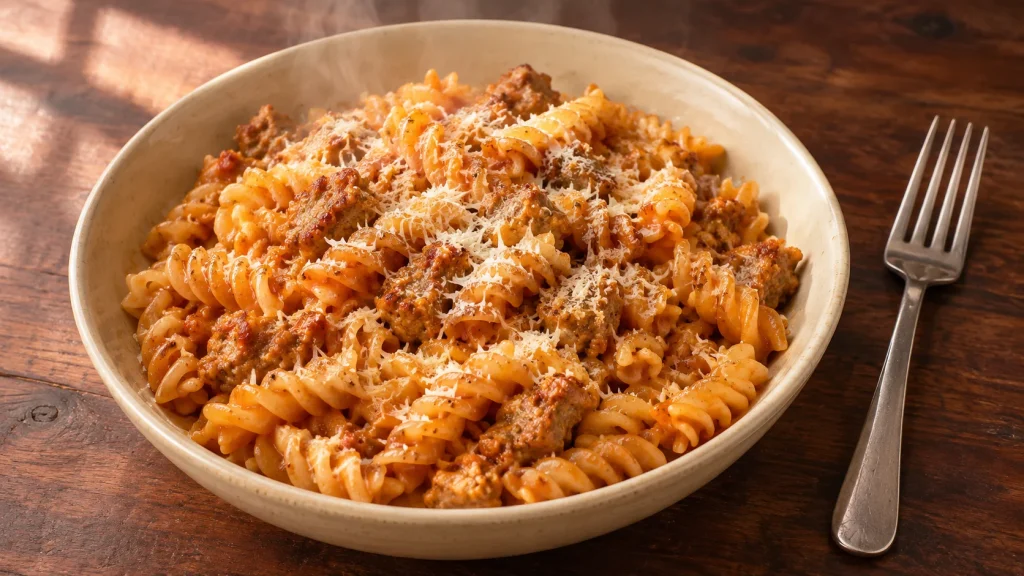
Keep a little sauce in the pan
Start with the measured 2 cups of stock. Rotini brands and pan sizes vary, so check the pasta as it simmers and add the extra hot stock or water only when needed. Leave a little starchy liquid before stirring in the cheese; the sauce will tighten as it stands.
Parmesan, without cream
The Parmesan is part of this recipe. Stir it in gradually after turning off the heat, and taste before adding salt because the sausage, stock and cheese all contribute some. Hot or mild Italian pork sausage works; choose the heat you want in the finished sauce.
About this recipe
Adapted from Louis Howard’s Creamy Sausage Ditalini reel, with rotini in place of ditalini, Parmesan included and no milk or cream. This version has not yet been kitchen-tested. Three servings and the roughly 25–30 minute total (5 minutes prep and 20–25 minutes cooking) are planning estimates; follow pasta doneness and the sausage temperature rather than the clock.
Twist and Snout: One-Pan Sausage Rotini
Ingredients
Method
- Heat a large, deep skillet or sauté pan with a lid over medium-high heat. Add the sausage without casings and break into bite-sized chunks. Let it brown in places rather than stirring constantly. Spoon off any pool of excess fat, leaving a little to cook the aromatics.
- Reduce the heat to medium. Stir in the garlic, tomato paste and Italian seasoning. Cook for 1 minute, stirring so the garlic does not scorch.
- Add the dry rotini and the measured 2 cups chicken stock. Stir and scrape up the browned bits, then bring to a gentle simmer.
- Cover and reduce the heat to maintain a gentle simmer. Use the rotini package cooking time as your starting guide, checking a few minutes early; a covered one-pan simmer can take longer than the package boiling time. Stir occasionally and scrape the bottom. Cook until the rotini is tender with a little bite rather than following a fixed ditalini time. If the pan runs low on liquid before the pasta is tender, add the extra hot stock or water a few tablespoons at a time, up to 1/2 cup as needed; do not add it all automatically. Confirm the pork sausage reaches 160°F.
- When the pasta is tender, keep a little loose starchy liquid in the pan rather than cooking it dry. If there is a large amount of excess liquid, simmer briefly uncovered, watching the pasta so it does not overcook.
- Turn off the heat. Stir in the Parmesan gradually. Loosen with a small splash from the extra stock or water allowance if the sauce tightens. No cream, milk or dairy substitute is needed.
- Taste and adjust salt and black pepper after cooking; sausage, stock and Parmesan already supply salt. Divide into 3 planned servings.
Notes
See the cooking notes for handling and reheating advice, or browse the recipe notebook.